Stability Metrics in Chimeral Variegation of Monstera Borsigiana
Introduction to Chimeral Variegation
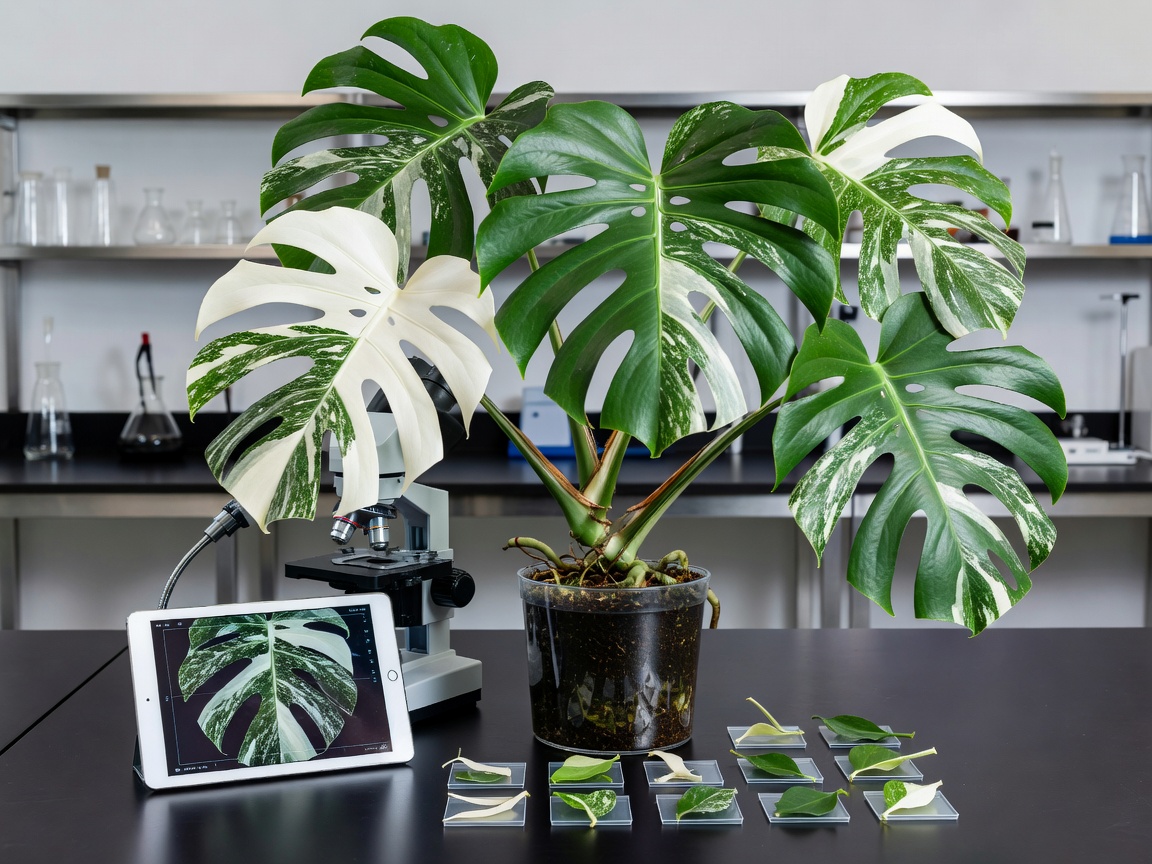
Chimeral plants possess two or more genetically distinct tissues growing adjacent to one another. In variegated Monstera deliciosa and borsigiana variants, this manifests as a physical division between cells capable of standard chlorophyll production and mutated cells deficient in photosynthetic active pigments.
Managing high-value holdings demands understanding chloroplast segregation trends. Unstable tissue culture clones often revert fully to standard green foliage, or deteriorate due to excessive white tissue sectoring (leading to necrosis under standard glasshouse lighting setups).
The Methodology of Chloroplast Mapping
By measuring the exact proportion of mutant L1 and L2 cell layers, geneticists can establish a mathematical probability metric representing the long-term stability of the variegation pattern. Standard micropropagation runs have shown a 42% green regression trend over five cycles unless cutting propagation is carefully selected at active meristem zones containing highly balanced chimeral boundaries.
We recommend testing active nitrogen feed cycles and filtering ambient solar radiation down to 180 micromols/m²/s to protect delicate chimeral white structures from typical browning regression.